

Sea Lettuce [Ulva sp.]
Sea lettuce, a green algae belonging to the Ulva genus, is a versatile and resource-efficient raw material that grows naturally along Sweden’s coasts. In recent years, it has gained attention as a key ingredient in sustainable industrial solutions, including food production, bioplastics, cosmetics, and biofuels. By utilizing this fast-growing algae, businesses can reduce environmental impact while offering products with high nutritional value and ecological benefits.
Sea lettuce refers to a group of green algae known for their thin, leaf-like structure and bright green color. It is a term used for green algae in the Ulva genus, which includes numerous species with overlapping morphology. Sea lettuce is edible and can be used in salads or soups. It is not a single species but rather a common term for various green algae in this genus.
The leaves of sea lettuce are light green and typically grow to 8–15 centimeters in length. The edges are ruffled and lobed, and under a microscope, the leaves appear as only two cell layers thick. These green algae regenerate their leaves every year.
Sea lettuce thrives in shallow waters, at depths of around 1–2 meters, along the west coast of Sweden and in the Baltic Sea up to the Bothnian Sea. It depends on sunlight for photosynthesis and thrives in nutrient-rich conditions. In some cases, it can grow in large quantities, forming sheets or mats. Its preference for nutrient-rich waters makes it an indicator of eutrophication.
Research is ongoing in Sweden and internationally to explore the use of sea lettuce in food production and various biochemical applications. Marine ecologist Sophie Steinhagen at the University of Gothenburg has been involved in this research.
Sea lettuce contains high levels of chlorophyll, making it highly efficient at absorbing carbon dioxide and producing biomass. This makes it an eco-friendly and resource-efficient solution for multiple applications.
Functional & Nutritional Value
-
High mineral density exceptionally rich in iodine, calcium, magnesium, iron, and potassium, supporting fortification and functional food applications.
-
Unique Polysaccharide Content (abundant in ulvan, with bioactive and functional properties (gelling, thickening, stabilizing) valuable for food, cosmetics, and biotech.
-
Protein & Fiber Source — provides plant-based protein with a balanced amino acid profile and dietary fiber that supports gut health, satiety, and prebiotic functions.

Application Versatility
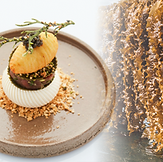
Food & Beverage
Common uses: Salads, soups,
healthy snacks, and seasoning blends.

Cosmetics & personal care
rich in antioxidants and minerals that support skin hydration and barrier function.

Supplements
Ulva fenestrata stands out as a rare plant-based source of biologically active vitamin B₁₂

Industrial uses
Bioplastics, packaging, and bio-based materials as sustainable alternatives.
Sustainability & Supply Chain
Seaweed farming has a zero-input cultivation — there is no need for arable land, freshwater, or fertilizers, minimizing production costs and ecological footprint. As it grows in the ocean, it absorbs carbon and nitrogen which supports measurable climate and ESG targets, that can support carbon-positive branding. Sugar kelp cultivation is highly scalable and adaptable to diverse coastal regions, enabling companies to diversify and secure raw material supply chains with a sustainable ocean-based resource.
Sugar kelp can contain up to ten times more minerals than land-based crops. It is rich in essential vitamins and minerals.
Nutrients:
-
Calcium
-
Iodine
-
Iron
-
Magnesium
-
Zinc
